
AFROCAB Amplifies African Youth Voices at Global SRHR & HIV Workshop
BANGKOK, THAILAND — Scientific innovation in the global HIV response has advanced, yet millions of adolescents, particularly those in low- and middle-income countries, continue to be left behind. Closing this gap requires moving beyond clinical solutions alone to address the structural, legal, and social barriers that shape young people’s lives and their access to care.
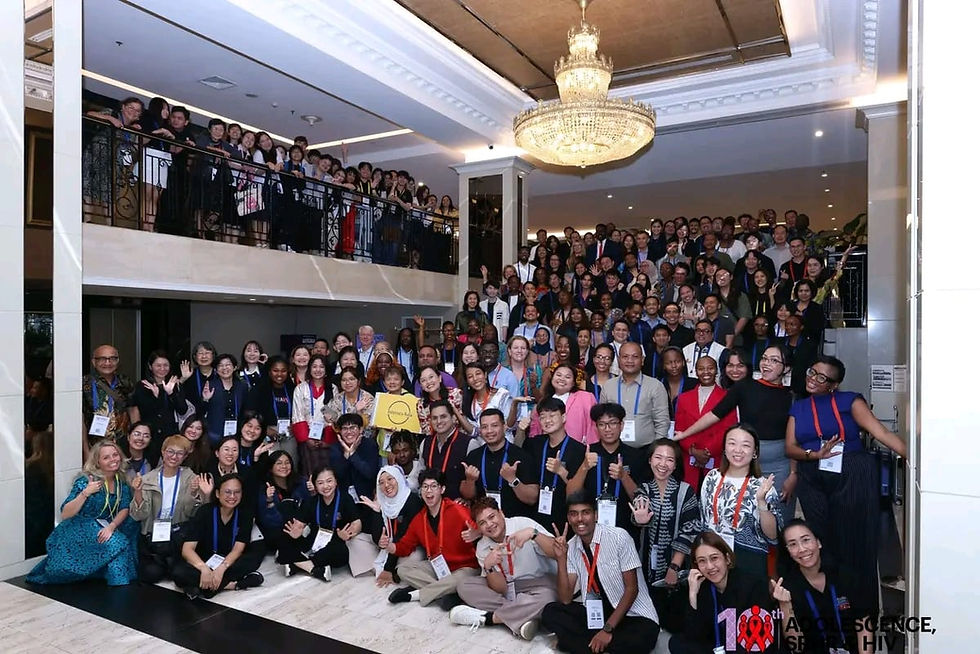
At the 10th International Workshop on Adolescence, Sexual and Reproductive Health and Rights (SRHR) & HIV, held from 21–23 September 2026 at the Mandarin Hotel in Bangkok, AFROCAB ensured that the lived experiences of African youth were brought to the forefront. The workshop focused on the broader realities of adolescents’ lives and the multiple, overlapping factors that influence their sexual and reproductive health and HIV needs.
Representing AFROCAB as Country Lead for South Africa, and having served as a member of the workshop’s Youth Reference Group since 2022, Nyiko Kubai brought a clear and uncompromising message from the continent: young people must not be treated merely as passive recipients of care, but as equal partners in shaping health innovations, policies and service delivery.
When the Law Reaches the Clinic First
Delivering the African regional address during a youth-only session dedicated to decoding SRHR and HIV policy, Kubai presented “Laws That Shape Lives: How Policy Reform Decides Whether Young Africans Reach SRHR and HIV Services.” His presentation examined how legal frameworks, national strategies and operational guidelines can ultimately determine whether a young person receives life-saving care or is turned away at the clinic door.
Kubai highlighted how age-of-consent laws, mandatory parental notification and the criminalisation of marginalised populations can create formidable barriers to essential health services. He pointed to three pervasive policy environments across parts of Africa that continue to undermine public health: restrictive laws criminalising same-sex relationships, rigid migration frameworks that leave undocumented and mobile young people without access to healthcare, and persistent gaps in embedding youth-friendly standards within primary healthcare systems.
The law reaches the clinic before the young person does.
Bridging the Gap Between Policy and Reality
The discussion went beyond identifying barriers to spotlighting scalable solutions. Kubai pointed to progressive frameworks such as South Africa’s National Adolescent and Youth Health Policy (2017) as an example of explicitly recognising adolescents as a distinct population requiring tailored standards of care. However, he cautioned that progressive language on paper means little without the systems and resources needed to put it into practice.
Realising the promise of such policies, he argued, requires dedicated budgets, modernised infrastructure, confidential spaces, well-trained healthcare workers and reliable supplies of youth-focused commodities.
Youth Leadership in Maintaining Young People on LAI Treatment and Improving Long-Term Outcomes
Beyond legislative reform, AFROCAB used the platform to advocate for a fundamental shift in how global health approaches youth engagement.
Co-chairing a on Innovations in HIV Treatment for Adolescents, and participating in a panel exploring approaches to maintaining young people on long-acting injectable (LAI) treatment and improving long-term outcomes, Kubai emphasised that youth involvement must go beyond consultation.
He highlighted the importance of grounding innovations in the realities of the young people who will ultimately use them. This means meaningfully involving young people at every stage of the pipeline: as equal co-creators of research priorities and trial design; as partners in product introduction and service delivery; and through youth-led monitoring and accountability.
Delivering his closing statement at the conference, Kubai called for:
Moving beyond tokenism and grounding innovations in the actual realities of young end users.
Kubai issued a direct challenge to researchers, donors and policymakers to dismantle traditional hierarchies and move towards genuine co-creation. He encouraged young leaders to boldly claim their place at decision-making tables and called on the scientific community to involve young people from the earliest stages of conceptualising new HIV prevention and treatment technologies.


Massar Service is a helpful platform for Moroccan students and parents who want to check school results, track grades, and stay updated on their academic progress. With Massar Service website https://massarservic.net/ and the Moutamadris portal, students can access important educational information using their Code Massar. If you are having trouble logging in or checking your results, make sure your account details are correct and follow the official instructions provided by the Moroccan Ministry of Education.